

Anxiety can makes us feel horrible. There is a good reason for anxiety and how the body reacts. However, as I explain in this blog about anxiety, if it stays with us or is there for the wrong reason, then it can be extremely unpleasant long-term and damaging to our mental and physical health.

Our nervous system is a complex structure within our bodies.
The nervous system is responsible for the functions that happen in our bodies, including the symptoms of anxiety.
The nervous system enables us to move, feel, breathe, and much more.
The Nervous System
The nervous system consists of two main parts: the central nervous system and the peripheral nervous system. We have the central nervous system, which is primarily related to the function of our brain and spinal cord. Then the peripheral nervous system, as the names suggests everything around the central parts of the brain and spinal cord, although everything is connected.

Peripheral Nervous System – How it relates to Anxiety
I am going to talk about the Peripheral nervous system. I will keep this simple. It is important to understand a bit about this part of your nervous system so that you have an understanding of how it relates to the symptoms of anxiety. Once you have this knowledge, then anxiety isn’t as scary, which means you can do something about it. You will have insight into how suffering with anxiety doesn’t have to happen forever. You do have the power to change the outcome of having to put up with the symptoms to reducing or eliminating them when they don’t serve a useful purpose.

The Peripheral nervous system has two parts. One is the automatic, and the other is somatic. The automatic part is how the name suggests automatic. We don’t have full control over this. It happens automatically. This part is responsible for the heart rate, digestion, and breathing. When we are not suffering from anxiety, all this runs normally within our bodies; our heart rate is good, we can digest our food properly, and we can breathe normally.
But when we have anxiety, our heart rate gets quicker and leads to our blood pressure rising, our digestive tract stops working as it should, and we could suffer with constipation, cramps, or diarrhoea, and our breath can become rapid and shallow, making it difficult to breathe and can lead to feeling dizzy, if we stay with the anxiety long term.
The somatic part of the peripheral nervous system is responsible for the senses and movement. These happen on a conscious level. We make a choice to move or engage with the senses.
Why Can Anxiety Be Good?
Having anxiety is perfectly normal. If we feel stressed or threatened, our autonomic part of the peripheral nervous system allows us to deal with the perceived threat. The heart rate speeds up so the body can pump blood around the body much faster to give us more energy to be able to fight or run. Our digestion stops working, so the energy can be targeted to where it needs to go at that moment of danger. The breath changes so that more oxygen can go into the lungs and bloodstream to be able to fuel the heart, brain, and muscles, which allows us to be more alert to deal with the perceived danger.
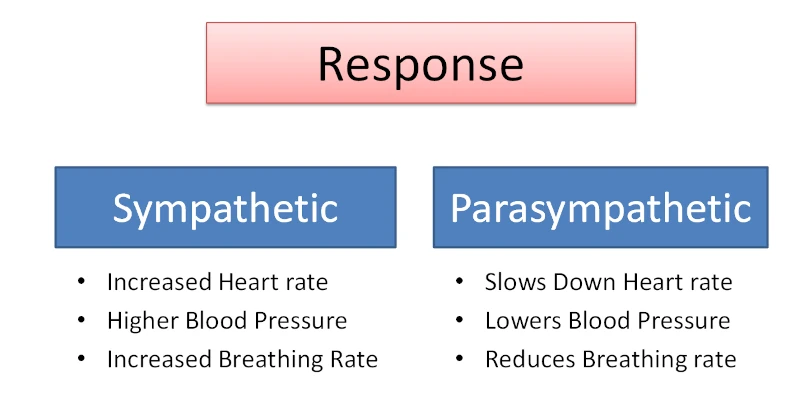
So anxiety can be good when it is appropriate. If we were in a dangerous situation, our bodies automatically react quickly, going into the Sympathetic response, but once we are out of danger, we should be able to relax again automatically, going into the Parasympathetic response. However, sometimes this doesn’t always happen due to a number of factors, like long exposure to the threat of danger and experience of trauma. Our thoughts or our subconscious can play a large part in sending a message to our nervous system, telling it that we are in danger when we are in fact not.

The parasympathetic response is where your body responds to the perceived threat no longer being there, so it helps the body relax. It slows down the heart rate, lowers the blood pressure, and slows down the breathing. If you are a person who suffers from anxiety long-term and often, it means that your nervous system doesn’t feel safe. So the parasympathetic response doesn’t kick in to put your body back to a relaxed state. Your nervous system thinks the perceived threat has not gone, so it stays in the sympathetic response (Fight or Flight mode). So your body continually works too hard; your blood pressure stays high because the blood is pumping fast around the body long term, and you are out of breath and fatigued. Our bodies are designed to be in Fight or Flight mode temporarily. When our bodies stay in Fight or Flight mode long term, it does put a strain on us physically, psychologically, and emotionally.
How Counselling & Psychotherapy Helps
Professional counselling and psychotherapy helps you to understand why your nervous system is not working properly. Techniques will be taught on how you can improve your dysregulated nervous system. Unhelpful behavioural and thought patterns will be identified and explored, enabling you to make positive changes. Life will become clearer and more fulfilling.